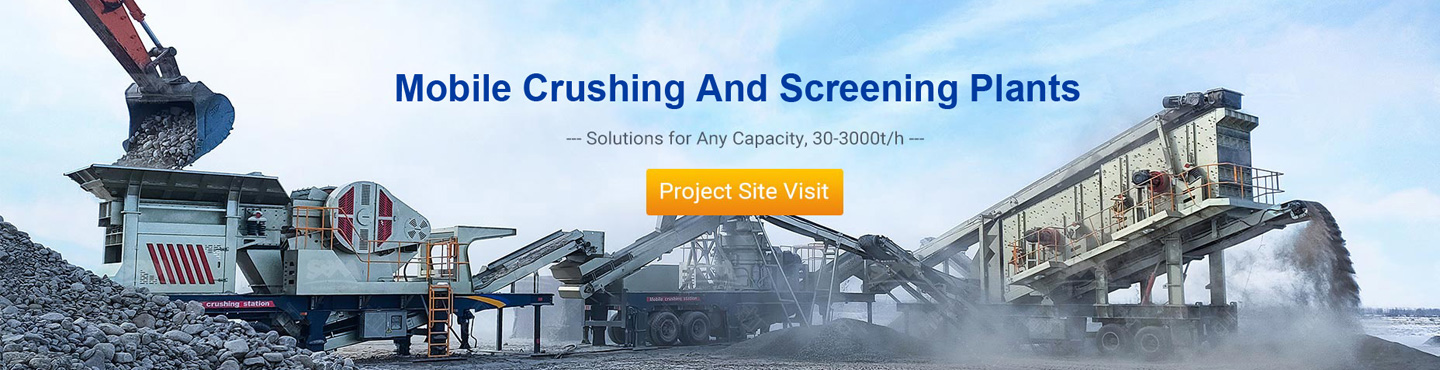
In small-scale mining and low-to-medium volume aggregate extraction, capital allocation efficiency dictates survival. Traditional stationary processing plants demand heavy upfront Capital Expenditure (CAPEX), prolonged civil engineering timelines, and irreversible concrete foundation pouring. For junior operators and short-term lease projects, this static infrastructure locks up valuable liquidity. Transitioning to a compact, mobile crusher suitable for small-scale mining offers an analytically precise pathway to minimize upfront risk, preserve operational cash flow, and maximize asset turnover.
The Financial Imperative: CAPEX Reduction via Civil Infrastructure Elimination
The primary barrier to rapid project profitability in small-scale mining is the site preparation cost of static installations. Stationary jaw and cone crushers require extensive civil works, including excavation, steel reinforcement, and heavy concrete pouring to withstand dynamic operational stresses. These costs are completely unrecoverable upon deposit depletion.
By deploying highly integrated, mobile units, operators achieve total elimination of heavy civil infrastructure. The machinery utilizes heavy-duty support legs that distribute dynamic loads directly onto stabilized ground. This architectural flexibility yields immediate balance sheet benefits:
- Upfront CAPEX Preservation: Capital previously earmarked for concrete engineering is retained as liquid working capital, improving early-stage debt service coverage ratios (DSCR).
- Accelerated Time-to-Market: Eliminating curing timelines for concrete foundations compresses the commissioning phase from months to days, initiating rapid revenue generation.
- Zero Asset Stranding: When an extraction block or quarry face is exhausted, 100% of the processing asset is relocated, maintaining a high residual book value and optimizing asset turnover.
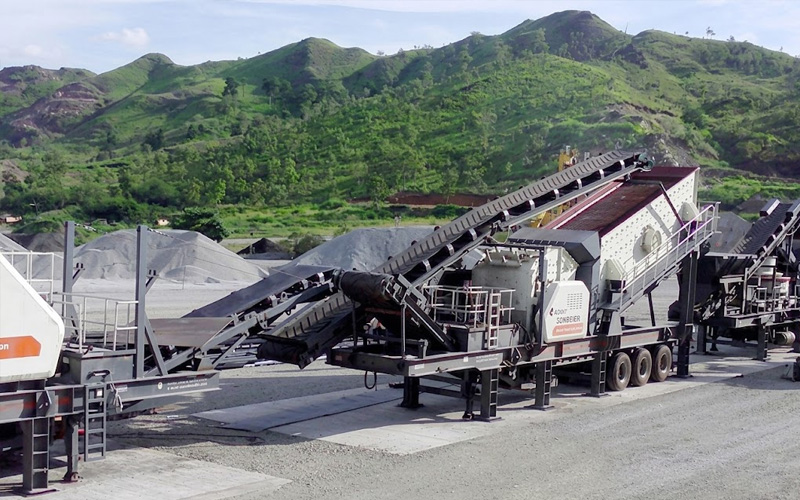
Operational Cost Auditing: Eliminating Double-Handling and Haulage Costs
A continuous drain on Operational Expenditure (OPEX) in mining is material handling logistics. In a stationary plant setup, blasted or excavated ore must be loaded onto haul trucks, transported to a centralized terminal, dumped, and then re-fed into the primary hopper. This multi-stage process introduces severe cost inefficiencies.
Onsite mobility re-engineers the logistics chain by bringing the crushing face directly to the blast pile. A mobile crusher can advance along the pit floor alongside the extraction face. This proximity yields measurable economic advantages:
| Operational Metric | Stationary Plant Configuration | Mobile Configuration | Financial / Operational Impact |
|---|---|---|---|
| Raw Material Transport | Heavy haulage trucks required from face to plant | Direct wheel loader feeding or short-haul transfer | Drastic reduction in diesel fuel consumption and fleet maintenance |
| Material Handling Stages | Double-handling (Loading, Unloading, Re-feeding) | Single-handling straight into processing hopper | Elimination of material degradation and moisture-related clogging costs |
| Site Reclamation Liability | High (Concrete demolition, site remediation) | Minimal (Equipment driven offsite, low footprint) | Lower asset retirement obligations (ARO) on balance sheet |
Technical Parameter Verification: The Agile Fleet for Compact Sites
To secure maximum throughput per kilowatt of installed power, equipment selection must precisely match the geological profile and spatial constraints of small-scale operations. Cross-referencing exact metrics from the global product database highlights heavy-duty, agile mobile configurations designed specifically for high-yield, compact site footprints.
Primary Mobile Crushing: NK75J Plant
For primary reduction of hard rock, run-of-mine ore, or large gravel blocks, the NK75J Primary Mobile Crusher represents the optimal balance of raw mechanical force and agile mobility. It integrates a premium PE3040 Jaw Crusher and a matched FK0936 Vibrating Feeder within a unified chassis, completely eliminating independent structural design costs.
- Maximum Feed Size: 680 mm
- Processing Capacity: 150–350 t/h
- Total Motor Rating: 141.4 kW
- Total Equipment Weight: 39 T
- Hopper Capacity: 6 m³
From an investment standpoint, the NK75J processes a massive 680 mm feed size without requiring a massive infrastructure footprint, allowing small-scale operators to accept un-crushed materials directly from primary blasting, cutting down secondary breaking costs.
Secondary and Tertiary Optimization Pathways
To produce highly marketable, calibrated aggregate or tightly sized ore fractions, the primary product must feed into matching mobile configurations. Operators can seamlessly integrate secondary stations depending on the material’s abrasiveness and final size distribution requirements:
- NK300H Secondary Mobile Crusher (Cone Configuration): Incorporating an HPT300 multi-cylinder hydraulic cone crusher, this unit handles highly abrasive materials at a capacity of 110–440 t/h with a 283 kW or 323.5 kW power draw, maximizing laminated crushing efficiency for excellent cubical product shape.
- NK1213C Primary/Secondary Impact Mobile Crusher: For medium-hard limestone or recycling applications, the integrated CI5X1213 Impact Crusher configuration delivers 150–300 t/h processing capacity with a 228.5 kW power rating, maximizing reduction ratios in a single pass.
Strategic Summary for CFOs and Mining Investors
Investing in a mobile crusher suitable for small-scale mining shifts the operational paradigm from rigid, long-term capital amortization to high-liquidity, fast-payback project execution. By eliminating civil engineering liabilities, cutting down haulage fuel burn, and utilizing highly optimized machinery like the 150–350 t/h NK75J plant, junior miners can achieve rapid project profitability. This agile asset strategy secures an aggressive path to positive cash flow while preserving the operational flexibility required to capture shifting market demands.
Frequently Asked Questions Regarding Small-Scale Mobile Crushing Assets
- How does a mobile crusher reduce upfront CAPEX compared to a stationary plant?
- A mobile crusher completely eliminates the need for expensive civil engineering works, excavation, and static concrete foundation pouring. This keeps capital liquid, reduces early-stage project risk, and enables rapid site setup, transforming fixed infrastructure liabilities into a highly mobile, re-deployable asset.
- What are the technical specifications of the primary mobile crusher recommended for compact mines?
- The primary recommendation is the NK75J Primary Mobile Crusher. It features an integrated PE3040 Jaw Crusher and FK0936 Vibrating Feeder. It accepts a maximum feed size of 680 mm, delivers an efficient capacity range of 150–350 t/h, operates on a total power rating of 141.4 kW, and includes a 6 m³ hopper footprint.
- Can mobile crushers handle highly abrasive materials like high-silica rock?
- Yes. For highly abrasive or hard rock applications within small-to-medium operations, the primary NK75J jaw plant can be coupled with secondary units like the NK300H Mobile Cone Crusher. The NK300H utilizes advanced multi-cylinder hydraulic cone technology (HPT300) to process hard materials within a 110–440 t/h range while optimizing wear parts consumption.
- How does onsite mobility impact daily operational expenditures (OPEX)?
- Onsite mobility allows the crushing plant to follow the extraction face closely. This eliminates material double-handling and heavily reduces external haulage truck loops, resulting in major daily savings on diesel fuel, haul fleet maintenance, and site labor costs.